The trauma is not “post.”
Urban Violence Traumatic Stress Disorder (UV-TSD) is a clinical framework for naming and responding to the chronic trauma carried by Black children and youth who grow up surrounded by persistent violence. YAAACE is piloting UV-TSD to better understand the clinical and psychological implications for children and youth who are perennially exposed to gun violence, and to build a model of care that meets them where they live.
UV-TSD describes the extreme emotional and psychological distress that results. Its symptoms mirror post-traumatic stress disorder (PTSD): intrusive memories, avoidance, hypervigilance, aggression and social withdrawal. For these young people, however, the trauma is not “post.” It is ongoing and cumulative, lived at school, on the block and online. It is deepened by traumatic grief as youth lose friends, siblings and classmates, and by the lack of culturally responsive care.
YAAACE introduced UV-TSD at our Black Youth Violence & Trauma Forum in November 2025.
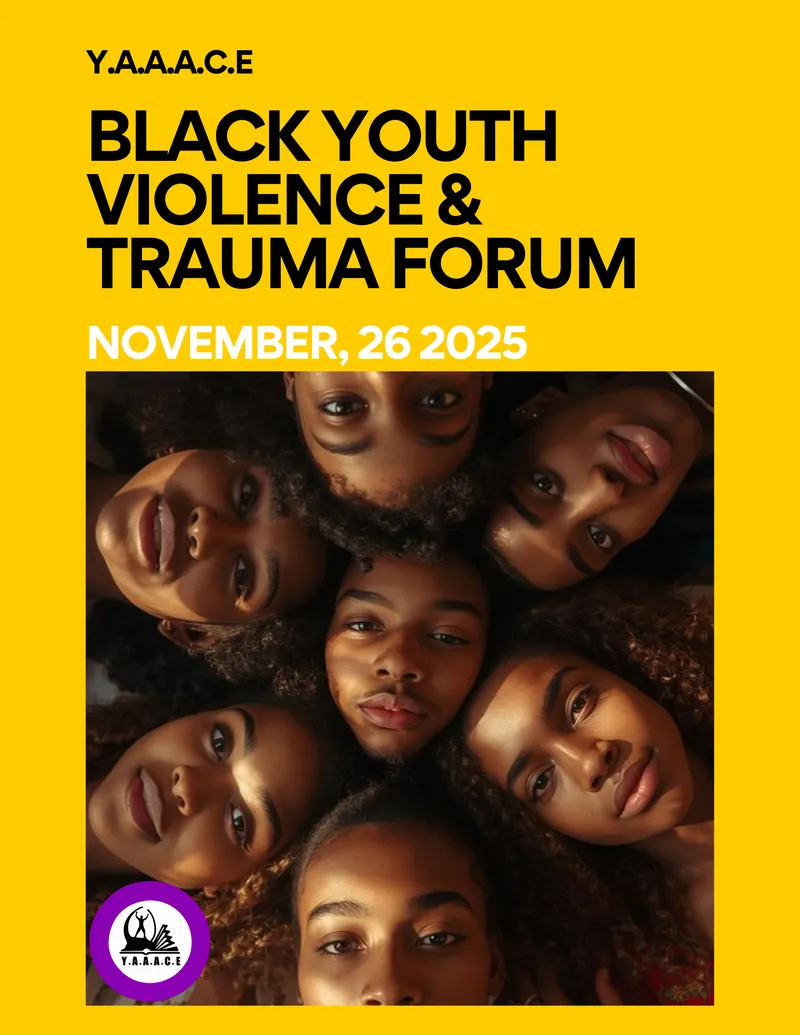
Where UV-TSD was introduced · 2025
Black Youth Violence & Trauma Forum Report (PDF, opens in a new tab)
Read the reportWhat We Offer
What it offers
The UV-TSD pilot brings clinical expertise and community knowledge together to identify, treat and prevent chronic violence-related trauma.
Clinical and research partnerships
YAAACE continues to work with established clinicians, medical professionals and researchers from some of Canada's most respected medical institutions, including SickKids, CAMH and Sunnybrook. These partnerships ground UV-TSD in rigorous clinical practice and research, and position YAAACE as a thought leader in the emerging UV-TSD mental health ecosystem.
- SickKids
- CAMH
- Sunnybrook
A trauma-informed interface for every young person
Each youth served through the pilot receives:
Culturally safe screening and assessment
Integrated program and care support across the full spectrum of social and mental health needs
A strengths-based approach that prioritizes each young person's assets, strengths and capacity
Support to build coping skills, resilience and recovery
Every Level
Support at every level of a young person's life.
The individual
Culturally appropriate clinical and program supports such as SMART, trauma-focused Dialectical Behavioural Therapy (DBT), Cognitive Behavioural Therapy (CBT), art therapy and acupuncture, alongside self-care, mindfulness and coping strategies youth can use on their own.
Family and social network
Links to Jane-Finch community services, cultural and spiritual centres including churches and mosques, coping and support groups, family group interventions, peer supports and social media innovations.
YAAACE
Anti-oppressive, anti-racist and culturally grounded service delivery; cultural and skills training for staff; trauma resilience programming; peer supports; and research on the dimensions of trauma and its impact on African Canadian youth.
Partner organizations
Mapping resources, auditing services and building coalitions around a shared anti-oppression, anti-racism and trauma-informed clinical and program practice framework.
The community
Mobilizing Jane-Finch community systems to meet basic needs, reduce mental health stigma, develop leadership, reinforce culture and improve access to supports.
Breaking the cycle of retaliation
Giving young people tools to process grief and conflict without reprisal, including the digital resilience to navigate the social media that fuels “get back” culture.
Our Goal
The change we are working towards.
YAAACE is committed to being the thought leader in the UV-TSD mental health ecosystem, alongside our clinical and research partners. We are working towards:
- 01
Recognition
UV-TSD understood across health care, education, justice and child welfare, so that a young person's distress is met with care, not punishment or labels.
- 02
Access
Early, culturally safe mental health care for Black children and youth in Neighbourhood Improvement Areas, delivered in their own communities rather than first through emergency rooms or police.
- 03
Prevention
Cycles of reprisal and retaliatory violence interrupted early through healing, mentorship, family support and opportunity.
- 04
Systems change
Reform of the social and economic policies and practices in criminal justice, housing, education and health that sustain structural poverty and anti-Black racism, with healthier public policy on the social determinants of health in Jane-Finch and similar communities.
- 05
Lasting investment
Mental health system reform, multi-sector advocacy and meaningful, long-term resource allocation, informed by evidence produced with our clinical and academic partners.
Violence affecting Black youth is a public health crisis. Our goal is neighbourhoods where every child can grow up safe, heal from what they have endured, and thrive.
Get in Touch
Questions about UV-TSD?